
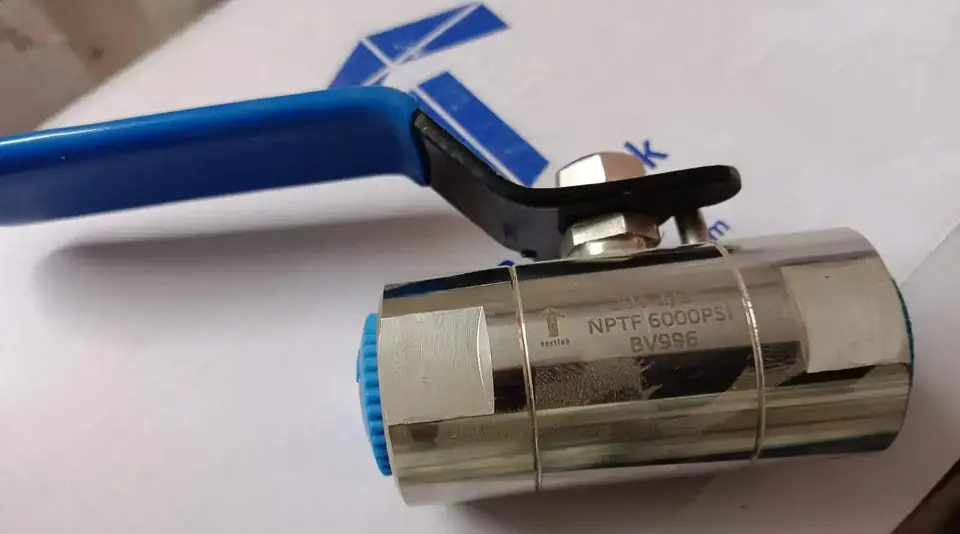
In modern industrial fluid engineering, hydraulic power systems serve as the mechanical muscle driving heavy manufacturing, subsea valve actuation, and chemical processing automation. These pipelines operate at structural boundaries where small leaks are not just costly, they are a catastrophic safety hazard.
For a long time, standard austenitic options like 316L stainless steel were the go-to choices for high-pressure pipelines. However, as fluid loops become more compact, system pressures escalate, and operating cycles increase, standard alloys face structural limits under the continuous impact of system dynamics.
To eliminate premature failure and micro-sealing compromises, plant operators are turning to high-performance dual-phase alloys. Let’s look at the mechanical engineering criteria for integrating components from a premium duplex high pressure pipe fittings manufacturer in India into high-vibration industrial networks.
The Destructive Mechanics of Hydraulic Pipelines
High-pressure hydraulic lines do not operate in a calm environment. Instead, they are subjected to a continuous combination of physical forces that target the weakest links in the piping architecture: the joints and fittings.
1. High-Frequency Pulsating Pressures
Industrial pumps, fast-acting directional control valves, and heavy cylinders create intense pressure spikes within the hydraulic fluid loop. These rapid pressure changes travel through the fluid lines like physical hammer strikes. If a fitting lacks high yield strength, these constant pulses can cause microscopic physical distortion over time, gradually loosening the critical metal-to-metal sealing surfaces.
2. Fatigue from System Mechanical Vibrations
Heavy industrial equipment, such as high-shear agitators, continuous processing pumps, and rotating machinery, transfers physical vibrations straight into connected tubing arrays. This continuous micro-movement creates localized strain at the fitting connection points. Standard stainless steel, while ductile, has lower fatigue limits, making it susceptible to work-hardening and sudden fatigue failure under continuous system vibration.
Mechanical Analysis: S32205 Duplex vs. Standard Alloys
To understand why working with a verified duplex high pressure pipe fittings manufacturer in India is a key upgrade for heavy-duty loops, we need to analyze the underlying material science.
Microstructural Breakdown:
[ Standard 316L Stainless ] ──► 100% Austenitic (Higher Ductility, Lower Structural Yield)
[ Duplex 2205 (S32205) ] ──► 50% Ferritic / 50% Austenitic (Exceptional Tensile Strength)
Duplex 2205 (UNS S32205) features a dual-phase microstructure consisting of roughly equal parts ferrite and austenite. This balanced architecture delivers mechanical performance characteristics that significantly outperform single-phase metals:
| Mechanical Metric | Standard 316L Stainless Steel | Duplex 2205 (UNS S32205) |
|---|---|---|
| Minimum Yield Strength | $\sim 290 \text{ MPa}$ | $\sim 450 \text{ MPa}$ (Nearly Double!) |
| Minimum Tensile Strength | $\sim 580 \text{ MPa}$ | $\sim 620 \text{ MPa}$ |
| Vibration Fatigue Resistance | Moderate | Exceptional |
| Chloride Stress Corrosion | High Vulnerability | Superior Resistance |
Why Partnering with a Duplex High Pressure Pipe Fittings Manufacturer in India Matters:
- Double the Holding Power: Because Duplex 2205 provides double the mechanical yield strength of standard stainless steel, it allows the fitting to maintain its strict geometric profile under intense internal pressure spikes.
- Dampening Mechanical Strain: The internal grain boundaries of the dual-phase ferritic-austenitic structure physically disrupt micro-crack propagation, providing exceptional fatigue life under the relentless stress of vibrating hydraulic lines.
Operating within the Thermal Window
While Duplex 2205 offers excellent strength, engineering a high-pressure loop requires a careful look at its thermal boundaries.
Sourcing from a specialized duplex high pressure pipe fittings manufacturer in India offers components with structural stability across wide temperature ranges, but industrial designers must adhere to strict code limits. According to ASME B31.3 processing rules, Duplex 2205 should not be used in continuous service environments exceeding $300^\circ\text{C}$ ($572^\circ\text{F}$).
If exposed to temperatures above this threshold for extended production cycles, the ferritic phase within the dual-phase matrix undergoes a structural change known as $475^\circ\text{C}$ embrittlement. This microscopic shift leaves the component brittle and prone to cracking under mechanical shock or high pressure. Within its safe operating window, however, it remains the most dependable choice for heavy industrial service.
When designing high-pressure hydraulic infrastructure, settling for standard alloys creates vulnerability to pressure fluctuations and structural vibrations. Upgrading your high-vibration piping loops to premium Duplex 2205 ensures your critical fluid control systems maintain long-term, leak-free performance.
Fortify Your High-Pressure Piping Architecture Eliminate the risks of vibration fatigue and operational pressure drops. Partner with Samvay Global, your trusted duplex high pressure pipe fittings manufacturer in India, providing precision-engineered, high-strength duplex and super duplex flow components built for severe-service industries.
[Contact Our Hydraulic Engineering Team for a Custom RFQ Today]