

High-Integrity Condensate Pots by Samvay Fluid Tekniks Inc.
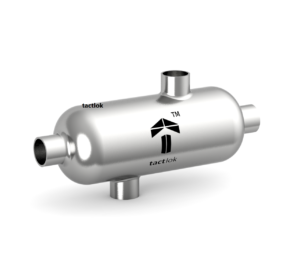
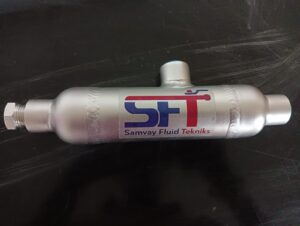
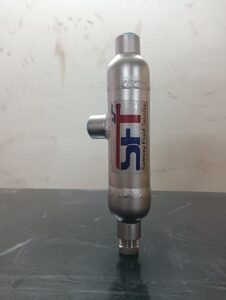
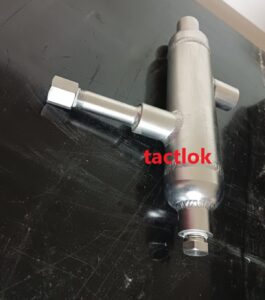
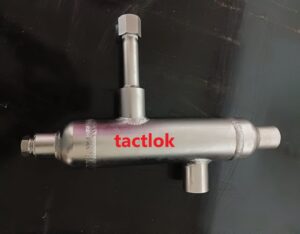
In steam and vapor services, the accuracy and longevity of your differential pressure (DP) transmitter depend entirely on a stable and consistent condensate level. Samvay Fluid Tekniks Inc. presents our premium range of Condensate Pots (also known as Seal Pots, Condensing Chambers, Steam Pots, or DP Transmitter Seal Pots), engineered to provide a reliable reference head and protect sensitive instrumentation from direct process exposure.
Product Overview
Condensate pots are essential components in steam flow measurement applications. Installed in the impulse lines near the tapping point on steam pipes, they serve two critical functions:
- Create a Constant Head: Steam entering the pot condenses, forming a uniform liquid column that transmits pressure to the DP transmitter without the fluctuations caused by live steam or partial condensation in impulse lines.
- Protect Instruments: The condensate barrier prevents high-temperature steam, entrained particles, scale, and corrosive media from reaching the sensitive diaphragm of the transmitter, extending instrument life and maintaining accuracy.
Why Condensate Pots Are Essential:
Without a properly designed and installed condensate pot, DP transmitters on steam service would experience:
| Problem | Consequence |
|---|---|
| Erratic Readings | Steam condensation in impulse lines causes varying density and pressure transmission |
| Thermal Damage | High-temperature steam directly contacting transmitter electronics |
| Premature Diaphragm Failure | Thermal stress and fatigue from direct steam exposure |
| Blockage | Scale and debris from steam lines entering transmitter |
| Freezing | Condensate freezing in impulse lines during winter |
| Measurement Errors | Fluctuating reference head affects accuracy |
Samvay condensate pots are designed for both vertical and horizontal mounting, offering flexibility in tight spaces while maintaining optimal performance. Each pot is manufactured to ASME standards and fully tested before dispatch.
Key Features & Benefits
| Feature | Technical Benefit | Operational Benefit |
|---|---|---|
| Full Penetration Welds | Maximum strength and integrity | No weld failures, long service life |
| Large Condensate Volume | Stable reference head, even during start-up | Accurate measurements from initial operation |
| Multiple Connection Options | Threaded, socket weld, or butt weld ends | Flexible installation, no adapters needed |
| Drain/Bleed Provisions | Easy maintenance and commissioning | Quick start-up, simple maintenance |
| Material Traceability | Complete documentation for critical service | Audit-ready quality records |
| Custom Sizing | Built to your exact volume requirements | Perfect fit for your application |
| NACE Compliance | Optional sour service certification | Suitable for oil & gas applications |
| Cryogenic Options | Extended lengths for low-temp service | LNG and cold service applications |
Technical Specifications
| Specification | Details |
|---|---|
| Material of Construction | ASTM A105 (Carbon Steel), AISI 304/L, 316/L Stainless Steel; Duplex (UNS S31803), Super Duplex (UNS S32750), Monel 400, Inconel 600/625, Hastelloy C276 on request |
| Standard Pipe Sizes (NPS) | 2″, 3″, 4″, 6″, 8″, 10″, 12″ |
| Standard Lengths | 8″ (200mm), 10″ (250mm), 12″ (300mm), 18″ (450mm), 24″ (600mm) |
| Custom Lengths | Available up to 72″ (1800mm) |
| Working Pressure | Up to 6000 PSIG (414 Bar) standard; Higher pressures available on request |
| End Connections | NPT/BSP Threaded, Socket Weld (ASME B16.11), Butt Weld (ASME B16.9), Flanged (ASME B16.5) |
| Process Connections | 1/2″ or 3/4″ NPT/BSP (standard); 1″, 1-1/2″ on request |
| Drain Connection | 1/2″ or 3/4″ NPT/BSP with ball valve or plug |
| Vent Connection | 1/4″ or 1/2″ NPT/BSP with plug or valve |
| Volume | 2 Liters to 50 Liters (depending on size and length) |
| Wall Thickness | Sch 40, Sch 80, Sch 160, XXS, or custom |
| Surface Finish | As-welded, pickled, passivated, electropolished, or painted |
| Temperature Range | -196°C to +800°C (depending on material) |
| Mounting Orientation | Vertical (standard) or Horizontal |
| Sour Service | Optional NACE MR0175 / ISO 15156 compliance |
Complete Product Range
By Material:
| Material | Grade | Application | Temperature Range |
|---|---|---|---|
| Carbon Steel | ASTM A105 | General steam service, non-corrosive, economical | -29°C to +427°C |
| Carbon Steel (Low Temp) | ASTM A350 LF2 | Cold climates, low-temperature service | -46°C to +427°C |
| Stainless Steel 304/L | AISI 304/L | General purpose, food, water, mild corrosion | -196°C to +538°C |
| Stainless Steel 316/L | AISI 316/L | Chemical, marine, pharmaceutical, chlorides | -196°C to +538°C |
| Stainless Steel 321 | AISI 321 | High-temperature service, welding applications | -196°C to +816°C |
| Stainless Steel 347 | AISI 347 | High-temperature, nuclear applications | -196°C to +816°C |
| Duplex SS | UNS S31803 / S32205 | High chloride, sour service, offshore | -50°C to +315°C |
| Super Duplex | UNS S32750 / S32760 | Extreme corrosion, subsea, high strength | -50°C to +315°C |
| 6% Moly | UNS N08367 | Seawater, bleach plants, FGD systems | -196°C to +400°C |
| Monel | Monel 400 | Hydrofluoric acid, seawater, marine | -196°C to +538°C |
| Inconel | Inconel 600/625 | High temperature, extreme corrosion | -196°C to +982°C |
| Hastelloy | C276 | Extreme chemical resistance, chlorine service | -196°C to +538°C |
| Titanium | Grade 2 | Aerospace, medical, extreme corrosion | -196°C to +316°C |
By Configuration:
| Type | Description | Best For |
|---|---|---|
| Vertical Pot | Process connections on top, drain at bottom | Most steam applications, gravity draining |
| Horizontal Pot | Side process connections | Space-limited installations, overhead lines |
| Jacketed Pot | With steam or electric tracing | High-viscosity fluids, freeze-prone services |
| Cryogenic Pot | Extended length, special materials | LNG, liquid nitrogen, cold services |
| High-Pressure Pot | Heavy wall, special design | Supercritical steam, high-pressure applications |
| Duplex Pot | Dual chambers for two transmitters | Redundant measurements, critical service |
| Multi-Connection Pot | Multiple process connections | Multiple instruments from one tap |
By Connection Type:
| Connection | Standard | Size Range | Pressure Rating |
|---|---|---|---|
| Threaded (NPT) | ASME B1.20.1 | 1/2″ to 2″ | Up to 3000 PSI |
| Threaded (BSP) | ISO 228 | 1/2″ to 2″ | Up to 3000 PSI |
| Socket Weld | ASME B16.11 | 1/2″ to 2″ | Up to 6000 PSI |
| Butt Weld | ASME B16.9 | 2″ to 12″ | Up to 6000 PSI+ |
| Flanged (ASME) | ASME B16.5 | 1/2″ to 12″ | Class 150 to 2500 |
| Flanged (DIN) | EN 1092 | DN15 to DN300 | PN16 to PN400 |
| Flanged (JIS) | JIS B2220 | 15A to 300A | 10K to 40K |
| Tube Fitting Ends | Various | 1/2″ to 1″ | Up to 6000 PSI |
By Volume (Standard Sizes):
| Pipe Size | Length | Volume (approx) | Typical Application |
|---|---|---|---|
| 2″ NPS | 8″ (200mm) | 1.5 Liters | Small steam lines, low pressure |
| 2″ NPS | 12″ (300mm) | 2.3 Liters | General steam service |
| 3″ NPS | 10″ (250mm) | 3.5 Liters | Medium steam lines |
| 3″ NPS | 18″ (450mm) | 6.3 Liters | High-pressure steam |
| 4″ NPS | 12″ (300mm) | 7.5 Liters | Large steam lines |
| 4″ NPS | 24″ (600mm) | 15 Liters | Critical measurements |
| 6″ NPS | 18″ (450mm) | 22 Liters | Main steam headers |
| 6″ NPS | 36″ (900mm) | 44 Liters | Supercritical applications |
Design & Engineering
ASME Code Design:
All Samvay condensate pots are designed in accordance with ASME Section VIII Division 1, the internationally recognized standard for pressure vessels. This ensures:
| Design Parameter | Requirement |
|---|---|
| Design Pressure | Minimum 1.5x operating pressure |
| Design Temperature | Operating temperature + margin |
| Corrosion Allowance | 1.5mm (standard), higher on request |
| Minimum Thickness | Per ASME UG-16 requirements |
| Hydrostatic Test | 1.3x design pressure |
Calculation Methodology:
Our engineers perform detailed calculations for every pot:
- Shell Thickness: Based on design pressure, diameter, and material allowable stress
- Head Thickness: For formed heads (if applicable)
- Nozzle Reinforcement: For all openings
- Weight Calculation: For lifting and support design
- Volume Calculation: To ensure adequate condensate capacity
Sizing Guidelines:
Minimum Recommended Volume:
| Service Condition | Minimum Volume |
|---|---|
| Low-pressure steam (<150 PSI) | 1-2 Liters |
| Medium-pressure steam (150-600 PSI) | 2-4 Liters |
| High-pressure steam (600-1500 PSI) | 4-8 Liters |
| Very high-pressure steam (>1500 PSI) | 8-15 Liters |
| Superheated steam | 50% larger |
| Rapid cycling service | 2x normal |
Quality & Compliance
Material Quality:
| Parameter | Standard / Test |
|---|---|
| Raw Material Sourcing | Prime mills with ISO 9001 certification |
| Material Certification | EN 10204 3.1 Mill Test Certificate |
| Chemical Composition | Spectro analysis verification |
| Mechanical Properties | Tensile, yield, elongation testing |
| Hardness Testing | Brinell or Rockwell |
| PMI Testing | Positive Material Identification on all alloys |
| Charpy Impact Testing | For low-temperature services |
| Grain Size | ASTM E112 for critical applications |
Welding Quality:
| Parameter | Standard / Test |
|---|---|
| Visual Inspection | 100% of all welds |
| Dye Penetrant Test (DPT) | 100% on all pressure welds (standard) |
| Radiography (RT) | Optional on longitudinal seams |
| Ultrasonic Test (UT) | Optional on thick sections |
| Magnetic Particle Test | For carbon steel (optional) |
| Hardness Testing | For NACE compliance |
Testing & Inspection:
| Test Type | Method | Acceptance Criteria |
|---|---|---|
| Hydrostatic Test | Water at 1.3x design pressure | No leakage, no permanent deformation |
| Dimensional Inspection | Calibrated instruments | Per drawing tolerances |
| Thread Gaging | GO/NO-GO gauges | Full compliance |
| Surface Inspection | Visual | No defects, sharp edges removed |
| PMI Verification | XRF or OES analyzer | Material grade confirmed |
| Hardness Test | Portable hardness tester | Within NACE limits (if applicable) |
Certifications & Compliance:
| Certification | Applicability |
|---|---|
| ISO 9001:2015 | Quality management system |
| EN 10204 3.1 | Material traceability |
| ASME Section VIII Div 1 | Pressure vessel design |
| ASME B31.1 | Power piping (for steam) |
| ASME B31.3 | Process piping |
| NACE MR0175 / ISO 15156 | Sour service (oil & gas upstream) |
| NACE MR0103 | Sour service (refining) |
| EAC / TR CU | Eurasian customs union |
Installation Guidelines
Location & Orientation:
Vertical Mounting (Preferred):
- Install with process connections on top, drain at bottom
- Ensure pot is vertical (±5°)
- Locate as close as possible to tapping point (within 12″)
- Slope impulse lines downward from pot to transmitter (minimum 1″ per foot)
- Provide adequate support for weight of pot and fill of condensate
Horizontal Mounting (Space-Limited):
- Install with process connections on side
- Ensure slight upward slope toward process tapping (1/4″ per foot)
- Provide additional support at both ends
- Consider drain connection location for complete draining
Installation Steps:
- Mount the Pot: Secure to pipe, wall, or support structure using appropriate brackets
- Connect Process: Install piping from process tapping to pot inlet(s)
- Install Valves: Add isolation valves at process connections (recommended)
- Connect Impulse Lines: Run tubing/pipe from pot outlets to transmitter
- Install Drain Valve: At bottom for maintenance and commissioning
- Fill with Water: Before start-up, fill pot with water through vent or drain
- Vent Air: Open vent to release trapped air during filling
- Insulate (if needed): For outdoor or freeze-prone locations
Pre-Startup Checklist:
| Item | Check |
|---|---|
| Pot securely mounted | ☐ |
| All connections tightened | ☐ |
| Drain valve closed | ☐ |
| Vent valve closed | ☐ |
| Pot filled with water | ☐ |
| Impulse lines connected | ☐ |
| Transmitter manifold installed | ☐ |
| Insulation applied (if required) | ☐ |
Common Mistakes to Avoid:
| Mistake | Consequence | Prevention |
|---|---|---|
| No initial water fill | Steam hits transmitter directly, thermal shock | Always pre-fill with water |
| Incorrect orientation | Incomplete condensate formation, erratic readings | Follow mounting instructions |
| Too far from tapping | Lag in response, condensation in lines | Install within 12″ of tapping |
| Upslope to transmitter | Air pockets, erratic transmission | Slope down from pot to transmitter |
| No insulation | Freezing in winter, heat loss | Insulate in cold climates |
| Undersized pot | Insufficient volume, fluctuating head | Calculate required volume |
| No drain valve | Difficult maintenance, cannot drain | Always provide drain |
Winterization:
- Insulate pot and impulse lines
- Add heat tracing (electric or steam)
- Use heat-transfer cement on tracing
- Consider heated enclosures
- Use freeze-protected instrument manifolds
Example:
For 15 feet of 1/2″ tubing (ID = 0.5″)
Volume per foot = π × (0.25)² × 12 = 2.36 in³/ft
Total volume = 15 ft × 2.36 in³/ft × 2 lines = 70.8 in³ (1.16 Liters)
Required pot volume = 1.16 × 10 = 11.6 Liters minimum
Selection Guide by Application:
| Application | Steam Pressure | Recommended Pot Size | Material | Special Features |
|---|---|---|---|---|
| Heating Boilers | <150 PSI | 2″ x 8″ or 3″ x 10″ | CS or SS304 | Standard |
| Process Heaters | 150-600 PSI | 3″ x 12″ or 4″ x 12″ | SS316 | NACE optional |
| Power Boilers | 600-1500 PSI | 4″ x 18″ or 6″ x 18″ | SS316 or P11 | High-pressure design |
| Supercritical Boilers | >1500 PSI | 6″ x 24″ or 8″ x 24″ | SS316 or P22 | Heavy wall, full RT |
| Turbine Extraction | 600-1500 PSI | 4″ x 18″ | SS316 | Fast response design |
| LNG / Cryogenic | N/A | 3″ x 18″ (extended) | SS304 | Long neck, cold service |
| Sour Service | Any | As required | SS316/Duplex | NACE MR0175 |
| Food Processing | <150 PSI | 3″ x 10″ | SS316L | Electropolished, drainable |
Global Export Destinations
Samvay Fluid Tekniks Inc. supplies condensate pots to major industrial projects across the globe:
North America:
| Country | Key Industries | Ports of Entry |
|---|---|---|
| USA | Power, Refining, Petrochemical | Houston, New Orleans, New York |
| Canada | Oil Sands, Power, Mining | Vancouver, Montreal, Halifax |
| Mexico | Power, Refining | Veracruz, Altamira |
South America:
| Country | Key Industries | Ports of Entry |
|---|---|---|
| Brazil | Oil & Gas, Ethanol, Power | Santos, Rio de Janeiro |
| Argentina | Oil & Gas, Power | Buenos Aires |
| Chile | Mining, Power | Valparaiso, San Antonio |
| Colombia | Oil & Gas, Power | Cartagena, Buenaventura |
| Peru | Mining, Power | Callao |
Europe:
| Country | Key Industries | Ports of Entry |
|---|---|---|
| United Kingdom | Power, Chemical | Felixstowe, Immingham |
| Germany | Chemical, Power | Hamburg, Bremerhaven |
| Netherlands | Refining, Chemical | Rotterdam |
| France | Nuclear, Chemical | Le Havre, Marseille |
| Italy | Refining, Power | Genoa, Naples |
| Norway | Oil & Gas, Marine | Oslo, Bergen |
| Spain | Refining, Power | Barcelona, Bilbao |
| Poland | Power, Chemical | Gdansk, Gdynia |
| Russia | Oil & Gas, Power | St. Petersburg, Novorossiysk |
Middle East:
| Country | Key Industries | Ports of Entry |
|---|---|---|
| UAE | Oil & Gas, Petrochemical | Jebel Ali, Ruwais |
| Saudi Arabia | Oil & Gas, Petrochemical | Dammam, Jubail |
| Qatar | Oil & Gas, LNG | Mesaieed, Ras Laffan |
| Kuwait | Oil & Gas | Shuwaikh, Mina Al Ahmadi |
| Oman | Oil & Gas | Sohar, Duqm |
| Iraq | Oil & Gas | Umm Qasr |
Africa:
| Country | Key Industries | Ports of Entry |
|---|---|---|
| Nigeria | Oil & Gas | Lagos, Port Harcourt |
| Angola | Oil & Gas | Luanda |
| Egypt | Oil & Gas, Power | Alexandria, Port Said |
| Algeria | Oil & Gas | Algiers, Bejaia |
| South Africa | Power, Mining | Durban, Richards Bay |
| Libya | Oil & Gas | Tripoli, Benghazi |
Asia Pacific:
| Country | Key Industries | Ports of Entry |
|---|---|---|
| Singapore | Refining, Petrochemical | Singapore Port |
| Malaysia | Oil & Gas, Petrochemical | Port Klang, Kuantan |
| Indonesia | Oil & Gas, Power | Jakarta, Surabaya |
| Thailand | Petrochemical, Power | Laem Chabang |
| Vietnam | Power, Refining | Ho Chi Minh, Hai Phong |
| South Korea | Refining, Power | Busan, Ulsan |
| Japan | Power, Refining | Tokyo, Yokohama, Osaka |
| Taiwan | Power, Petrochemical | Kaohsiung, Taipei |
| India | Power, Refining, Chemical | Mumbai, Chennai, Kandla |
| Australia | Power, LNG | Sydney, Melbourne, Perth |
Industry Applications
Power Generation:
| Application | Pot Size | Material | Special Requirements |
|---|---|---|---|
| Boiler Steam Drum | 4″ x 18″ or 6″ x 24″ | SS316 or P11 | High-pressure, ASME Section I |
| Superheater Outlet | 4″ x 18″ | P22 or SS321 | High temperature, creep-resistant |
| Reheater Lines | 4″ x 18″ | P22 or SS321 | High temperature |
| Turbine Extraction | 4″ x 12″ | SS316 | Fast response |
| Feedwater Heaters | 3″ x 12″ | CS or SS304 | Moderate pressure |
| Deaerators | 3″ x 12″ | CS | Low pressure, large volume |
| Auxiliary Boilers | 3″ x 10″ | CS | General service |
Oil & Gas – Upstream:
| Application | Pot Size | Material | Special Requirements |
|---|---|---|---|
| Steam Injection | 4″ x 18″ | SS316 or Duplex | NACE MR0175, high pressure |
| Production Separators | 3″ x 12″ | SS316 | NACE, possible H2S |
| Gas Processing | 3″ x 12″ | SS304/L | Low temperature possible |
| Offshore Platforms | 4″ x 12″ | Duplex/Super Duplex | Compact, saltwater resistant |
Oil & Gas – Downstream:
| Application | Pot Size | Material | Special Requirements |
|---|---|---|---|
| Refinery Steam Systems | 4″ x 18″ | SS316 or P11 | High temperature, possible sour |
| Catalytic Crackers | 4″ x 18″ | SS321 | High temperature, erosion |
| Hydrotreaters | 4″ x 18″ | SS316/L | NACE, high pressure |
| Cokers | 6″ x 24″ | SS316 | Severe service, erosion |
Chemical & Petrochemical:
| Application | Pot Size | Material | Special Requirements |
|---|---|---|---|
| Ethylene Plants | 4″ x 18″ | SS321 | High temperature cracking |
| Ammonia Plants | 4″ x 18″ | SS316/L | High pressure, sour |
| Methanol Plants | 4″ x 12″ | SS304/L | General service |
| Chlor-Alkali | 3″ x 12″ | Hastelloy or Titanium | Chlorine service |
Pulp & Paper:
| Application | Pot Size | Material | Special Requirements |
|---|---|---|---|
| Recovery Boilers | 4″ x 18″ | SS316/L | Corrosive black liquor |
| Lime Kilns | 3″ x 12″ | SS304 | High temperature |
| Paper Machine Dryers | 4″ x 18″ | CS or SS304 | Rotary joints, special connections |
Food & Beverage:
| Application | Pot Size | Material | Special Requirements |
|---|---|---|---|
| Evaporators | 3″ x 12″ | SS316L | Electropolished, drainable |
| Sterilizers | 3″ x 10″ | SS316L | Hygienic design |
| Cookers | 3″ x 12″ | SS304 | Food-grade |
Pharmaceutical:
| Application | Pot Size | Material | Special Requirements |
|---|---|---|---|
| WFI Systems | 3″ x 12″ | SS316L | Electropolished, Ra <0.4μm |
| Pure Steam | 3″ x 12″ | SS316L | USP compliance, drainable |
| Autoclaves | 3″ x 10″ | SS316L | Sanitary connections |
Customization Options
Standard Features Included:
| Feature | Description |
|---|---|
| ASME Design | Calculations per ASME Section VIII |
| Material Traceability | EN 10204 3.1 certification |
| Hydrostatic Test | 1.3x design pressure |
| DPT on Welds | 100% dye penetrant inspection |
| Drain Connection | 1/2″ NPT with plug or valve |
| Vent Connection | 1/4″ NPT with plug |
| Stainless Steel Tag | With P/N, material, rating |
| Identification Stamp | Permanent stamping on body |
Optional Features:
| Option | Description | When to Specify |
|---|---|---|
| NACE Compliance | MR0175 or MR0103 | Sour service, oil & gas |
| Full Radiography | 100% RT of all welds | Critical service, high pressure |
| Ultrasonic Testing | UT of plate/welds | Thick wall, critical |
| PMI Testing | 100% positive material ID | Alloy materials, traceability |
| Electropolishing | Ra <0.4μm finish | Pharmaceutical, food |
| Special Ends | Flanged, tube fittings, etc. | Customer preference |
| Special Materials | Duplex, Monel, Hastelloy | Corrosive service |
| Certification Package | Complete documentation | Project requirements |
Ordering Information
How to Specify Your Condensate Pot:
- Service Conditions:
- Operating pressure (PSI or Bar)
- Operating temperature (°C or °F)
- Fluid (steam, vapor, etc.)
- Size Requirements:
- Pipe size (NPS or DN)
- Length (inches or mm)
- Volume (liters) if known
- Material:
- Carbon Steel (A105, A106)
- Stainless Steel (304, 316, etc.)
- Other alloys
- Connections:
- Process connection type and size
- Drain connection (valve or plug)
- Vent connection (valve or plug)
- Special Requirements:
- NACE etc.
- NDT requirements (RT, UT, etc.)
- Special finishes
- Quantity: Number of pots required
Why Choose Samvay Fluid Tekniks Inc.?
1. Code Compliance:
All pots designed and stamped per international standards.
2. Application Expertise:
Our team has decades of experience in steam and vapor applications. We help you select the right size, material, and configuration for your specific process conditions.
3. Full Traceability:
- Material Test Certificates (EN 10204 3.1)
- Dimensional Report
- Hydrostatic Test Certificate
- NDT Reports (if applicable)
- ASME Data Report (if stamped)
4. Quality Assurance:
- 100% inspection of all welds
- 100% hydrostatic testing
- PMI verification on all alloys
- Third-party inspection welcome
5. Global Delivery:
- We ship to any port worldwide
- FOB, CIF, EXW terms available
- Export packaging for sea/air freight
- Full export documentation
- Tracking updates
6. Competitive Pricing:
- Direct from manufacturer means no middlemen markups
- Volume discounts for bulk orders
- Annual contract pricing available
7. Quick Turnaround:
| Order Type | Design Time | Fabrication | Shipping |
|---|---|---|---|
| Standard Sizes | 1-2 days | 2-3 weeks | As per mode |
| Custom Engineered | 3-5 days | 3-4 weeks | As per mode |
| Exotic Materials | 3-5 days | 4-6 weeks | As per mode |
Request a Quote
Protect your critical DP transmitters with Samvay condensate pots.
For Quick Quotation, Please Provide:
- Steam pressure and temperature
- Pipe size required (NPS)
- Length required
- End connection type
- Material of construction
- Quantity required
- Any special requirements (NACE etc.)
- Target delivery location