
From our machining base in Ahmedabad we supply needle valves to Australia, a market shaped by LNG in Western Australia and Queensland and iron ore and lithium mining. Remote Australian sites value complete, correctly packed orders, because a missing part can mean a long wait.
A needle valve uses a fine tapered stem to throttle or isolate small flows with precise control, which makes it the standard choice for isolating gauges, transmitters and sampling points. In Australia the typical service is remote, hot mining sites and marine LNG service, so grade selection and documentation matter as much as price. Every order ships with heat traceable material and a test record.
Needle Valves for industries in Australia
Isolating pressure transmitters, gauges and sample points on process and wellhead lines.
Gauge isolation on furnace cooling and gas lines.
Double block isolation of instruments on hydrocarbon lines during calibration.
Isolating gauges on high pressure reverse osmosis trains.
Choosing the right grade in Australia
Service conditions in Australia usually mean remote, hot mining sites and marine LNG service. These are the grades we most often supply for that duty.
| Recommended grade | Why it suits Australia |
|---|---|
| Super duplex 2507 or S32760 | High chloride air and seawater, where PREN above 40 resists pitting and crevice corrosion |
| SS 316L with impact testing | Low temperature and cryogenic duty, with Charpy test results on request |
| SS 316 or carbon steel A105, heavy pattern | Vibration, dust and frequent remaking, where thicker bodies and hard seats last longer |
Needle Valves specifications
| Thread | NPT PT BSPP G |
| Size | 1/2″ to 4″ (DN15 to DN100) |
| Function | 4 Way, 3 Way, 2 Way, 5 Way, |
| Connection | Welded, Socket, Clamped, Flanged, Threaded |
| Pressure Class | 3000PSI, 5000PSI |
| Pressure Rating | 3000 PSI, 1500 PSI, 6000 PSI |
Needle Valves we supply in Australia
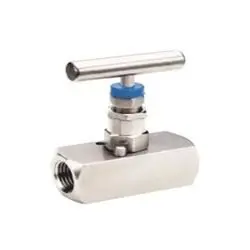
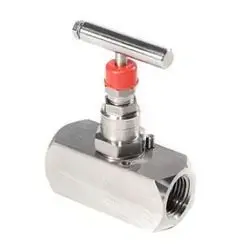
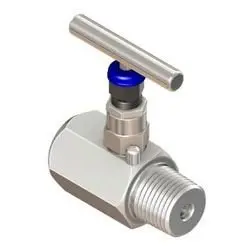
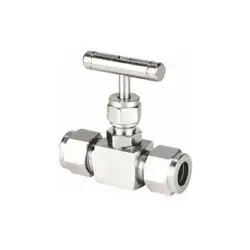
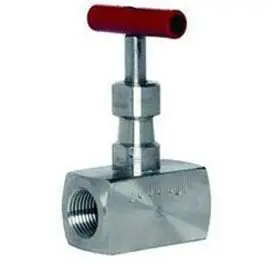
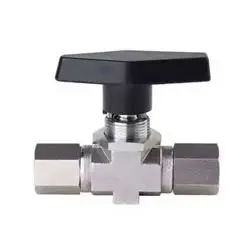
Standards and documents for projects in Australia
- AS 4041 references
- ASME B31.3
- EN 10204 3.1
- Positive material identification and hydrostatic test reports on request
- Packing lists, origin certificates and HS code 73072900 or 84818030 on every invoice
Delivery to Australia
We deliver by sea from Mundra or Nhava Sheva to Fremantle or Brisbane in about 18 to 25 days. Our regular delivery points include:
- Perth
- Karratha
- Gladstone
- Pilbara
Frequently asked questions
Which material grade do you recommend for projects in Australia?
For high chloride air and seawater, where PREN above 40 resists pitting and crevice corrosion, we usually recommend Super duplex 2507 or S32760. Where conditions are milder, SS 316L with impact testing is a cost effective alternative. Share your process data and we will confirm the grade before quoting.
Can Samvay supply needle valves to sites around Perth?
Yes. We ship by sea from Mundra or Nhava Sheva to Fremantle or Brisbane in about 18 to 25 days. Regular consignments reach Perth, Karratha, Gladstone and Pilbara, and mixed orders of valves, fittings and accessories can be consolidated into one shipment with a single set of documents.
What certificates come with orders for Australia?
Orders for Australia are supplied to AS 4041 references, ASME B31.3 and EN 10204 3.1. Every part is heat marked and traceable to its mill certificate, and third party inspection by the agency of your choice can be arranged before dispatch.
What pressure ratings and end connections are available?
Our needle valves are rated at 1500, 3000 and 6000 psi, in sizes from 1/2 inch to 4 inch (DN15 to DN100), with NPT, PT and BSPP threads or socket weld, flanged and clamped ends. Two way, three way, four way and five way patterns are available, so one supplier can cover root valves, gauge isolation and manifold duties on the same project in Australia.
How do I request a quote for Australia?
Email your item list with sizes, grade, quantity and delivery point to sales@samvayglobal.com or message us on WhatsApp at +91 77389 26862. We reply within one working day with price, lead time and shipping terms for Australia.