
Precision Pressure Snubbers by Samvay Fluid Tekniks Inc.
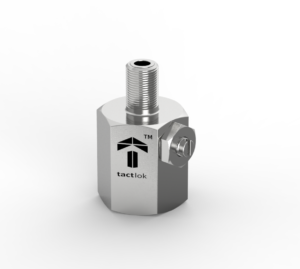

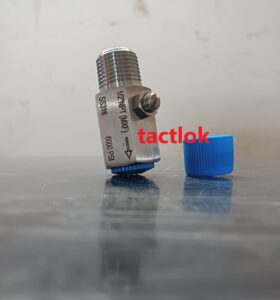
Pressure gauge flutter caused by reciprocating pumps, rapid cycling valves, or system pulsation leads to inaccurate readings, operator confusion, and premature instrument wear. Samvay Fluid Tekniks Inc. presents our advanced range of Pressure Snubbers (also known as Pulsation Dampeners, Gauge Protectors, or Pressure Pulse Dampeners), designed to smooth out these fluctuations and deliver a steady, readable pressure to your instruments.
Product Overview
A snubber acts as a protective “shock absorber” for your pressure instruments. By restricting the flow of the media into the gauge, it dampens harmful spikes, surges, water hammer, and fluid pulsation. This not only ensures a stable reading but also significantly extends the operational life of the gauge by reducing mechanical fatigue.
How Snubbers Work:
Different snubber types use different mechanisms, but all achieve the same goal: smoothing pressure fluctuations.
| Type | Operating Principle |
|---|---|
| Piston Type | A precision-fit piston moves within a cylinder, dampening surges through controlled fluid bypass |
| Porous Metal Type | Fluid passes through a sintered metal disc, which diffuses pressure pulses by creating controlled resistance |
| Adjustable Needle Type | A fine-thread needle valve allows field adjustment of the orifice size to tune damping |
| Diaphragm Type | A flexible diaphragm isolates the instrument while transmitting pressure hydraulically |
Why Snubbers Are Essential:
| Problem | Consequence | Solution |
|---|---|---|
| Gauge Flutter | Difficult to read, operator uncertainty | Snubber smooths pulsations |
| Pressure Spikes | Damage to bourdon tube, calibration shift | Snubber absorbs spikes |
| Water Hammer | Sudden pressure surges damage internals | Snubber dampens impact |
| Mechanical Fatigue | Premature failure from cycling | Snubber reduces cycles |
| False Trips | Switches operate on spikes, not true pressure | Snubber provides true reading |
Key Features & Benefits
| Feature | Technical Benefit | Operational Benefit |
|---|---|---|
| Multiple Types Available | Piston, Porous, Adjustable for any application | One source for all damping needs |
| Wide Pressure Range | From vacuum to 60,000 PSI | Suitable for any system |
| Broad Temperature Range | -320°F to 1500°F | Cryogenic to high-temp service |
| Corrosion-Resistant Materials | SS316, Hastelloy, Monel | Compatible with any fluid |
| Compact Design | Small footprint, direct mount | Fits anywhere, no extra piping |
| Field Adjustable | Adjustable models allow tuning | Optimize damping on-site |
| Self-Cleaning Option | Piston type self-purging | Handles dirty fluids |
| Bi-Directional | Works in both flow directions | Universal installation |
| Full Traceability | Material certifications | Audit-ready documentation |
Technical Specifications
| Specification | Details |
|---|---|
| Material of Construction | SS316/L, SS304, Hastelloy C276, Monel 400, Inconel 625, Titanium, Alloy 20 |
| Connection Size | 1/8″, 1/4″, 3/8″, 1/2″, 3/4″, 1″ NPT / BSP |
| Connection Type | Male x Male, Male x Female, Female x Female |
| Pressure Limits | Standard: Up to 6,000 PSI; High-pressure: Up to 20,000 PSI; Ultra-high: Up to 60,000 PSI |
| Operating Temperature | Standard: -65°F to 450°F (-54°C to 232°C); Extended: -320°F to 1500°F (-195°C to 815°C) |
| Snubber Types | Piston Type, Porous Metal Type, Adjustable Needle Type, Diaphragm Type, Integral with Syphon |
| Port Size Options | 0.002″ to 0.125″ orifice (depending on type and model) |
| Service | Liquid, Gas, Steam, or Combination |
| Damping Ratio | Up to 90% reduction in pulsation amplitude |
| Surface Finish | As-machined, passivated, electropolished |
| Cleaning | Standard industrial clean; Oxygen cleaning available |
| Identification | Laser marked with type, material, pressure rating |
Complete Product Range
By Snubber Type:
| Type | Description | Best For | Pressure Range |
|---|---|---|---|
| Piston Type | Spring-loaded or free-floating piston in cylinder | Viscous liquids, dirty fluids, high-pressure | Up to 60,000 PSI |
| Porous Metal Type | Sintered stainless steel or Hastelloy disc | Gases, clean liquids, high-temperature | Up to 10,000 PSI |
| Adjustable Needle Type | Precision needle valve for orifice adjustment | Field tuning, varying conditions, R&D | Up to 10,000 PSI |
| Diaphragm Type | Flexible metal or elastomer diaphragm | Sanitary applications, clean services | Up to 1,500 PSI |
| Integral Snubber | Combined with syphon or other fitting | Compact installations, steam service | Up to 6,000 PSI |
| Fixed Orifice | Precision drilled orifice plate | Constant conditions, economical | Up to 6,000 PSI |
By Connection Size:
| Connection Size | Male-Male Length | Male-Female Length | Female-Female Length |
|---|---|---|---|
| 1/8″ | 1.5″ (38mm) | 1.8″ (46mm) | 1.6″ (41mm) |
| 1/4″ | 1.8″ (46mm) | 2.1″ (53mm) | 1.9″ (48mm) |
| 3/8″ | 2.0″ (51mm) | 2.3″ (58mm) | 2.1″ (53mm) |
| 1/2″ | 2.3″ (58mm) | 2.6″ (66mm) | 2.4″ (61mm) |
| 3/4″ | 2.8″ (71mm) | 3.1″ (79mm) | 2.9″ (74mm) |
| 1″ | 3.3″ (84mm) | 3.6″ (91mm) | 3.4″ (86mm) |
By Material
| Material | Grade | Application |
|---|---|---|
| Stainless Steel | SS316/L | General purpose, chemical, pharmaceutical |
| Stainless Steel | SS304 | General purpose, food, water |
| Hastelloy | C276 | Extreme corrosion, acids, chlorides |
| Monel | 400 | Hydrofluoric acid, seawater |
| Inconel | 625 | High temperature, oxidation |
| Titanium | Grade 2 | Aerospace, medical, extreme corrosion |
| Alloy 20 | – | Sulfuric acid service |
By Fluid Type
| Fluid | Snubber Type | Material | Special Feature |
|---|---|---|---|
| Dirty Fluids | Piston Type | SS316 | Self-cleaning action |
| Viscous Fluids | Piston Type | SS316 | Larger piston clearance |
| Steam | Porous Metal or Integral with Syphon | SS316 | High-temperature design |
| Corrosive | Porous Metal or Piston | Hastelloy/Monel | Match material to fluid |
| Sanitary | Diaphragm Type | SS316L | Electropolished, crevice-free |
By Pressure Pulsation Severity
| Severity | Amplitude | Recommended Type | Damping Required |
|---|---|---|---|
| Mild | <10% of pressure | Fixed Orifice or Porous Metal | Low (2-5:1) |
| Moderate | 10-25% of pressure | Porous Metal or Adjustable | Medium (5-10:1) |
| Severe | 25-50% of pressure | Piston or Adjustable | High (10-20:1) |
| Extreme | >50% of pressure | Piston with spring | Very High (>20:1) |
Quality & Compliance
Material Quality
| Parameter | Standard / Test |
|---|---|
| Raw Material | Certified barstock from prime mills |
| Material Certification | EN 10204 3.1 Mill Test Certificate |
| Chemical Composition | Spectro analysis verification |
| PMI Testing | Positive Material Identification (optional) |
| Hardness Testing | For NACE compliance |
Dimensional Quality
| Parameter | Standard / Test |
|---|---|
| Thread Accuracy | ASME B1.20.1 (NPT) or ISO 228 (BSP) gauges |
| Piston Fit | Precision ground, 0.0002″ – 0.0005″ clearance |
| Orifice Size | Verified with pin gauges |
Performance Testing
| Test | Method | Acceptance Criteria |
|---|---|---|
| Pressure Test | 150% of working pressure | No leakage, no permanent deformation |
| Leak Test | Air under water | Zero bubbles |
Certifications
| Certification | Applicability |
|---|---|
| ISO 9001:2015 | Quality management system |
| EN 10204 3.1 | Material traceability |
| NACE MR0175 | Sour service (optional) |
| NACE MR0103 | Refinery sour service (optional) |
Installation Guidelines
Mounting
- Direct Mount: Install snubber directly into gauge port for compact installation
- Remote Mount: Install in impulse line between process tap and gauge
- Vertical Orientation: Preferred for liquid service to allow air to rise
- Horizontal Orientation: Acceptable for gas service
Common Mistakes to Avoid
| Mistake | Consequence | Prevention |
|---|---|---|
| No snubber on pulsating lines | Gauge failure, inaccurate readings | Always use snubber on pumps |
| Over-dampening | Slow response, missed pressure spikes | Adjust for minimal effective damping |
| Wrong type for fluid | Clogging (porous in dirty fluid) | Select correct type |
| Incorrect material | Corrosion, failure | Check chemical compatibility |
| No isolation valve | Can’t service snubber online | Install upstream isolation valve |
| Piston installed upside down | Poor damping, air entrapment | Follow orientation guidelines |
Industry Applications
Oil & Gas
| Application | Snubber Type | Material | Special Requirements |
|---|---|---|---|
| Reciprocating Pumps | Piston Type | SS316 | High-pressure, NACE |
| Wellhead Chokes | Piston or Adjustable | SS316 | Sour service |
| Pipeline Surge | Adjustable | SS316 | Field adjustable |
| Compressor Discharge | Porous Metal | SS316 | Oil-resistant seals |
| Hydraulic Systems | Piston Type | SS316 | 5,000+ PSI |
Power Generation
| Application | Snubber Type | Material | Special Requirements |
|---|---|---|---|
| Boiler Feed Pumps | Piston Type | SS316 | High-pressure, high-temp |
| Turbine Lube Oil | Porous Metal | SS304 | Clean oil, low pressure |
| Condensate Pumps | Piston Type | SS304 | Water service |
| Cooling Water | Porous Metal | SS304 | General purpose |
Chemical Processing
| Application | Snubber Type | Material | Special Requirements |
|---|---|---|---|
| Dosing Pumps | Piston Type | SS316 | Chemical resistant |
| Reactors | Porous Metal | Hastelloy | Corrosive service |
| Transfer Pumps | Piston or Porous | SS316 | General chemical |
Water & Wastewater
| Application | Snubber Type | Material | Special Requirements |
|---|---|---|---|
| Sludge Pumps | Piston Type | SS304 | Dirty service, self-cleaning |
| Chemical Feed | Piston Type | SS316 | Chemical resistant |
| High-Pressure Pumps | Piston Type | SS304 | 1,000+ PSI |
| Filter Presses | Piston Type | SS304 | Cyclic pressure |
Pharmaceutical
| Application | Snubber Type | Material | Special Requirements |
|---|---|---|---|
| WFI Systems | Diaphragm Type | SS316L | USP Class VI, sanitary |
| Bioreactors | Diaphragm Type | SS316L | Sterilizable |
| Chromatography | Porous Metal | SS316L | Ultra-clean |
Why Choose Samvay Fluid Tekniks Inc.?
- Complete Range:
- All types: Piston, Porous, Adjustable, Diaphragm
- All materials: SS316, Hastelloy, Monel, etc.
- All sizes: 1/8″ to 1″
- Precision Engineering:
- CNC machined to tight tolerances
- Consistent performance unit to unit
- 100% tested before shipment
- Application Expertise:
- Right type for your fluid
- Correct material for your process
- Proper size for your flow
- Quality Assurance:
- Material certifications with every order
- Pressure tested
- Cleaned and bagged
- Global Supply:
- Export packaging
- Door-to-door shipping
- Full documentation
Ordering Information
How to Specify Your Snubber:
- Type Required: Piston, Porous, Adjustable
- Connection Size: 1/4″, 1/2″, etc.
- Connection Type: Male-Male, Male-Female
- Thread: NPT or BSP
- Material: SS316, Hastelloy, etc.
- Pressure Rating: Operating pressure
- Fluid Type: Liquid, gas, or steam
- Special Requirements: Oxygen cleaning, NACE, etc.
For Quick Quotation:
- Snubber type and quantity
- Connection size and thread
- Material required
- Pressure range
- Fluid type
- Any special requirements