
In high-pressure processing lines, fluid isolation is your frontline defense for operational safety. Instrumentation lines across chemical plants, refinery skids, and subsea platforms transport volatile fluids under immense stress. When standard materials face these severe conditions, they often fail—leading to fluid bypass, localized corrosion, and costly plant shutdowns.
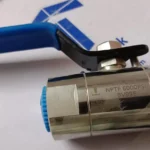
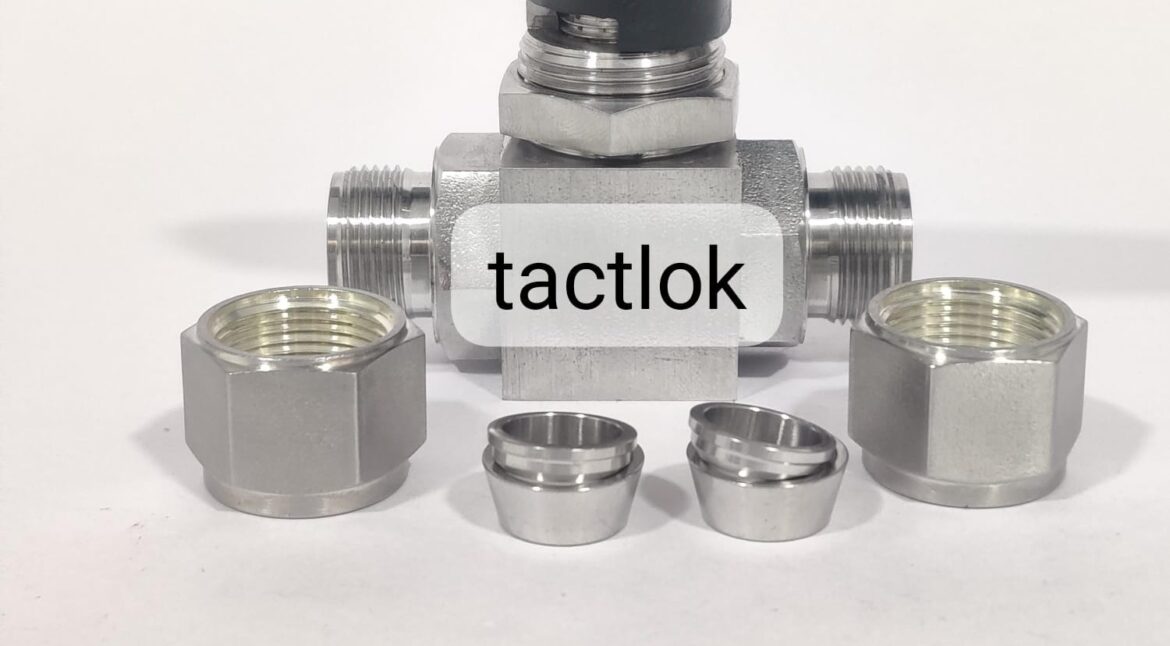
To maintain system integrity, engineering teams are upgrading their specifications from standard 316L stainless steel to high-strength alloys. If you are responsible for sourcing high-pressure flow controls, choosing the right duplex instrumentation ball valve manufacturer is critical to securing leak-free infrastructure.
Here is an engineering guide to evaluating duplex isolation valves and why they are necessary for high-pressure industrial systems.
The Destructive Forces Targeting Instrumentation Valves
Quarter-turn ball valves are uniquely vulnerable to operational wear because they sit directly in the fluid stream. In demanding process loops, they must survive a combination of intense physical forces:
High Torque and Severe Operating Pressures
Fittings and valves in high-pressure loops frequently manage operational boundaries from 6,000 PSI up to 10,000 PSI. Under these loads, the internal ball is forced downstream against the valve seat. If the metal lacks sufficient yield strength, the valve body can distort slightly over long cycles, increasing the torque required to operate it and wearing out the primary seals.
Localized Pitting and Stress Corrosion Cracking (SCC)
Fluid streams containing trace acids, sour gas ($H_2S$), or high chloride concentrations constantly attack the internal metal surfaces. When you pair this chemical exposure with the residual stress of high-pressure assembly, standard stainless steel valves are highly susceptible to sudden, brittle cracking.
Metallurgical Breakdown: S31803 / S2205 Duplex vs. 316L
To understand why working with an expert duplex instrumentation ball valve manufacturer is a vital upgrade, we need to look at the dual-phase crystal structure of Duplex 2205 (UNS S31803 / S32205).
Unlike traditional 316L stainless steel, which is completely austenitic, duplex stainless steel features a balanced microstructure of roughly $50\%$ austenite and $50\%$ ferrite.
| Performance Metric | Standard 316L Stainless Steel | Duplex 2205 (UNS S31803 / S32205) |
| Minimum Yield Strength | $\sim 290 \text{ MPa}$ | $\sim 450 \text{ MPa}$ (Nearly Double!) |
| Microstructure Phase | $100\%$ Austenite | Dual-Phase Ferritic / Austenitic |
| Pitting Resistance (PREN) | $\sim 23 – 25$ | $\sim 34 – 36$ (Superior Localized Defense) |
| Chloride Stress Corrosion | High Vulnerability | Exceptional Resistance |
Why This Dual-Phase Chemistry Protects Your Flow Loops:
- Zero Shell Deformation: The high yield strength of Duplex 2205 allows a specialized duplex instrumentation ball valve manufacturer to design heavy-wall, compact valve bodies that maintain absolute dimensional tolerances under full system pressure.
- Crack Propagation Barrier: The balanced ferritic-austenitic grain boundaries act as physical speedbumps, catching micro-cracks and preventing them from migrating through the pressure housing.
Key Design Metrics to Audit in Your Valve Supplier
Material quality is only the first step; precision design completes the safety equation. When auditing your instrumentation valve supplier, look for these three build requirements:
1. High-Performance Seat Configurations
Because the duplex body can withstand extreme pressure profiles, the true temperature and fluid compatibility boundaries are dictated by the valve seats. Ensure your supplier offers reinforced PTFE seats for general chemical lines, or premium PEEK seats for severe service loops experiencing continuous pressure pulses.
2. Blowout-Proof Stem Designs
The valve stem must be designed to load from the inside of the valve body rather than the outside. This ensures that even under severe over-pressurization, the fluid dynamics cannot physically blow the stem out of the housing, protecting operators during unexpected spikes.
3. Precision-Polished Ball Spherical Tolerances
Super duplex and standard duplex are highly work-hardening metals that are notoriously difficult to machine. A master duplex instrumentation ball valve manufacturer uses advanced CNC grinding machinery to ensure the ball is perfectly round. Microscopic variations in the ball shape will slice through soft seats within just a few hundred operational cycles, causing hidden, internal fluid leakage.
Cutting corners on fluid isolation components introduces unnecessary risk into volatile process loops. Upgrading your high-pressure instrumentation skids to field-verified Duplex S32205 ball valves delivers the mechanical toughness, erosion resistance, and structural integrity required to keep your operations running safely.
Fortify Your High-Pressure Isolation Loops Eliminate fluid bypass and premature valve degradation. Partner with Samvay Global—your premier duplex instrumentation ball valve manufacturer, providing precision-machined, severe-service flow control components built for global industrial engineering standards.
[Contact Our Valve Engineering Team to Request an Instrumentation Quote Today]